Pierre Morrel
Pierre Morrel, the owner of the firm Morrel & Son of Marseilles and master of the three-masted vessel the Pharaon, is introduced as a man of probity and warmth. When the Pharaon arrives in port on the 24th of February, 1815, without its captain, Leclere, who has died of brain-fever, Morrel immediately goes aboard in a small skiff to learn the news. He is met by the young mate Edmond Dantes, whom he questions with concern, first about the cargo and then about the captain. Learning that the cargo is safe, Morrel is visibly relieved, and he listens with sympathy as Dantes describes Leclere's death. Morrel's first act is to offer Dantes the command of the Pharaon, telling him, "If I were sole owner we'd shake hands on it now, my dear Dantes, and call it settled; but I have a partner." He promises to secure the other vote, and Dantes, overwhelmed, thanks him in the name of his father and of Mercedes. Morrel then encourages the young man to go ashore to see his father and his betrothed, lending him the use of his own skiff. Throughout this opening scene, Morrel is distinguished by his kindness, his trust in Dantes, and his willingness to promote a deserving subordinate.
Role in Dantes' Arrest and Imprisonment
When Dantes is arrested at his wedding feast, Morrel is the first to act. He immediately goes to the Palais de Justice to plead for Dantes, but Villefort, the deputy procureur, treats him with disdain, noting that Morrel is a plebeian and suspected of Bonapartism. Morrel persists, writing petitions and interceding for Dantes during the Hundred Days, when Napoleon is briefly restored. He visits Villefort again, now serving the emperor, and demands Dantes' release. Villefort, to protect his own secret, dictates a petition exaggerating Dantes' services to Napoleon, but then suppresses it, ensuring Dantes remains imprisoned. After Waterloo and the second Restoration, Morrel, now powerless, ceases his efforts, having done all he could. He also shows his loyalty to Dantes' family: he visits old Dantes, offers to take him into his own house, and after the old man's death, pays for his funeral and settles his small debts. Caderousse later confirms that Morrel "twenty times interceded for Edmond" and that "the night or two before his death, as I have already said, he left his purse on the mantelpiece, with which they paid the old man's debts, and buried him decently."
The Ruin of Morrel & Son
Fourteen years later, Morrel is a ruined man. He has lost five ships in two years and suffered three bankruptcies. His only remaining hope is the Pharaon, expected from the Indies with a cargo of cochineal and indigo. He is reduced to selling his wife's and daughter's jewels and his own plate to meet payments. The inspector of prisons, M. de Boville, who has 200,000 francs invested with Morrel, fears bankruptcy and is ready to sell the debt. At this moment of crisis, a stranger representing himself as the chief clerk of Thomson & French of Rome appears. This is the Count of Monte Cristo in disguise. He buys Boville's debt and all other bills against Morrel, then grants Morrel a three-month extension, saying, "I will give you three months." Morrel, overwhelmed with gratitude, accepts. But the reprieve is short-lived. The Pharaon is reported lost in a storm, and Morrel, facing 287,500 francs in debts with only 15,257 francs in hand, prepares to kill himself rather than face dishonor. He writes his will, loads a brace of pistols, and waits for the fatal hour.
The Miraculous Salvation
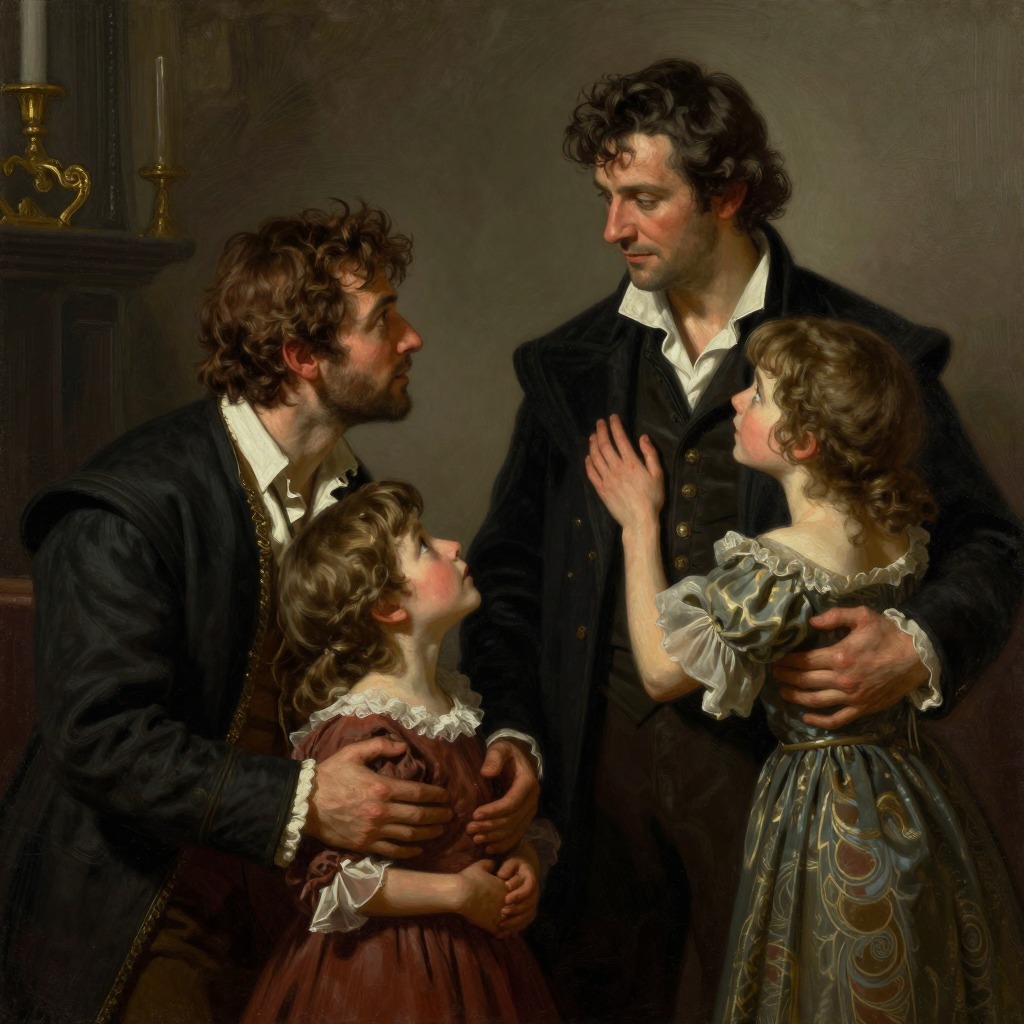
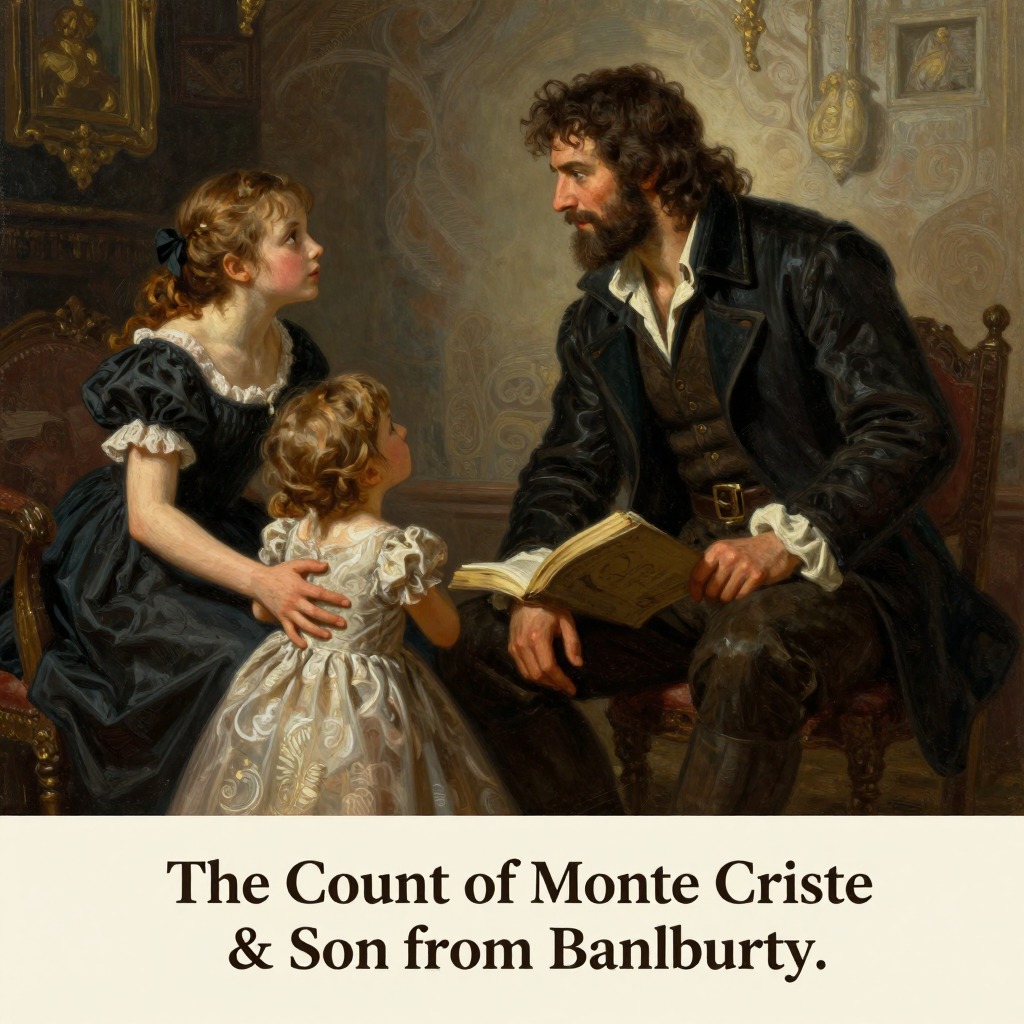
On the morning of the 5th of September, the day of the final reckoning, Morrel's daughter Julie receives a mysterious letter signed "Sinbad the Sailor," instructing her to go to a house in the Allees de Meillan and retrieve a red silk purse from a mantelpiece. She obeys, and finds the purse containing the receipted bill for 287,000 francs and a diamond as large as a hazel-nut, with the note "Julie's Dowry." At the same moment, a new ship, also named the Pharaon and loaded with cochineal and indigo, is sighted entering the port of Marseilles. Morrel, his family, and the entire city witness the miracle. As Morrel and his son embrace on the pier, the Count of Monte Cristo, concealed behind a sentry-box, watches with delight and murmurs, "Be happy, noble heart, be blessed for all the good thou hast done and wilt do hereafter, and let my gratitude remain in obscurity like your good deeds." Then, with the words, "Farewell kindness, humanity, and gratitude! Farewell to all the feelings that expand the heart! I have been heaven's substitute to recompense the good — now the god of vengeance yields to me his power to punish the wicked!" he departs in his yacht. Morrel's salvation is complete, and he is restored to prosperity and honor.
Legacy and Thematic Significance
Pierre Morrel embodies the virtue of disinterested kindness in a world of treachery and greed. His unwavering support for Dantes, his care for Dantes' father, and his own honorable conduct in business make him the one character in the novel who is purely good and who receives a reward rather than punishment. Monte Cristo himself acknowledges this, telling Maximilian Morrel, "I am the man who sent the purse to your young sister, and the Pharaon to old Morrel — because I am the Edmond Dantes who nursed you, a child, on my knees." Morrel's story serves as the counterpoint to the fates of Danglars, Villefort, and Morcerf, demonstrating that the Count's power can be used for redemption as well as vengeance. His survival and happiness are the proof that the novel's final message — "Wait and hope" — is not merely a consolation for the suffering but a promise that goodness will ultimately be recognized and rewarded.